Copy + Paste: When "Inspired By" Becomes Straight-Up Theft
So, something happened recently. And before you ask—no, we're not mad. But we did notice.
One of the largest sunless tanning brands in the industry, with massive distribution and resources that we're still building toward, recently launched a campaign that looks... familiar.
Similar formulas. Our taglines. Our three-year-old campaign shoot. All of it, repackaged and released as if it were their original idea.
At first, we laughed. Then we screenshot everything. Then we moved on. Because here's the thing about being copied: it's annoying, sure. But it also means you're doing something right.
"Inspired By" vs. Straight-Up Theft: Let's Define It
There's a difference between inspiration and imitation, and the industry loves to blur that line.
Inspiration is when you see something, let it spark an idea, and create something new from it. You take the essence, the energy, the concept—and you build your own version that reflects your brand, your voice, your perspective.
Imitation is when you see something working and decide to copy-paste it because you don't have anything original to say.
Theft is when you take someone else's work. Their messaging, their visuals, their entire creative direction, and slap your logo on it like no one will notice.
Guess which one happened here.
Why Big Brands Copy Small Ones (And Why It's Weak)
Here's what's wild: this brand didn't need to copy us. They have the budget, the team, the resources to create something original. They could've invested in their own vision, their own voice, their own creative direction.
But they didn't. Because originality takes risk. It takes a point of view. It takes the confidence to say something new instead of just echoing what's already working.
And when you're a legacy brand that's been playing it safe for years, watching a younger, smaller brand come in and actually connect with people? It's easier to copy than it is to evolve.
That's what this is. It's not flattery. It's laziness disguised as strategy.
Big brands copy small ones because small ones are moving faster, thinking differently, and building communities that actually care. And instead of asking why that's working, they just replicate the surface and hope no one notices.
We noticed.
What They Copied (And Why It Matters)
Let's get specific.
Our formulas.
We didn't just throw together a spray tan solution and call it a day. We spent years developing formulas that work across all skin tones, that last longer than anything else on the market, that don't oxidize weird or fade patchy. We built them with intention. With testing. With feedback from real artists and real clients.
Suddenly, another brand has a remarkably similar product lineup. Same benefits. Same claims. Different label.
Our taglines.
We've been saying certain things since day one. Bold, unapologetic lines that reflect what Alt Sun stands for—freedom, rebellion, refusing to shrink yourself for anyone. Those aren't just marketing. They're our foundation.
There they are, though. Reworded slightly. Repackaged. Used in someone else's campaign, like they came up with it themselves.
Our campaign visuals.
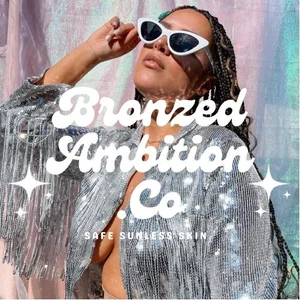
Three years ago, we shot a campaign that was raw, real, and unapologetically us. The aesthetic. The energy. The way we framed our models. The entire team and models cast being BIPOC women. It wasn't an accident—it was intentional.
Recently, we saw another brand release imagery that looks strikingly similar. Same vibe. Same framing. Same energy. Just different faces.
Coincidence? Maybe. But when it's the formulas, the taglines, and the visuals all at once? That's a pattern.
Why We're Not Pressed (But We're Also Not Quiet)
Here's why we're not losing sleep over this:
1. Copying doesn't build loyalty.
You can replicate a product. You can steal a tagline. You can mimic a campaign. But you can't copy the relationship we've built with our community. You can't fake the trust, the connection, the reason people choose Alt Sun over everyone else.
Clients don't stay because of a formula. They stay because of what the brand stands for. And you can't copy that.
2. Imitation confirms we're leading.
If a massive brand with infinitely more resources than us is watching what we do and copying it, that tells us everything we need to know. We're not chasing trends—we're setting them. And they know it.
3. We're not interested in playing defense.
We could spend our time calling them out publicly, starting internet drama, demanding credit. Or we could keep building, keep innovating, keep staying three steps ahead while they scramble to keep up.
We chose the latter. Because the best response to being copied isn't outrage—it's evolution.
4. Our community sees it.
The people who've been with us from the start? They know what's ours. They see when someone else tries to replicate it. And they're loyal not because we're the biggest, but because we're the realest.
That loyalty isn't something you can manufacture. And it's definitely not something you can steal.
To the Brand That Copied Us (You Know Who You Are)
We see you. Your team sees our work, takes notes, and repackages it as your own. We get it. It's easier than coming up with something original.
But here's the thing: we're not stopping. We're not slowing down. And we're not waiting for you to catch up.
While you're busy copying what we did three years ago, we're already building what's next. So by all means, keep watching. Keep taking notes. Keep trying to replicate what we're doing.
We'll be ahead of you the entire time.
The Takeaway for Other Small Brands
If you're a small brand and you've been copied by a bigger one, here's what you need to know:
It's validation, not defeat.
Being copied means you're doing something worth copying. It means you're leading, not following. It means your ideas matter enough that someone with a bigger budget is threatened by them.
Don't waste energy on outrage.
You could spend weeks publicly calling them out. Or you could spend that time building the next thing they'll copy in two years. One keeps you stuck. The other keeps you ahead.
Your authenticity is your competitive advantage.
They can copy your products, your taglines, your visuals. But they can't copy the reason people actually care about your brand. Protect that. Build on that. Let that be what separates you.
Keep going.
The worst thing you can do is slow down because someone stole your idea. They're counting on you to get discouraged and quit. Don't give them that satisfaction.
We're Not Mad. We're Motivated.
ALT SUN was built on rebellion. On refusing to accept an industry that wasn't built for everyone. On doing things differently, even when it would've been easier to follow the blueprint.
So when a major brand copies us it doesn't shake us. It reminds us why we started in the first place.
Because the beauty industry doesn't need more copycats. It needs more originals.
Imitation might be flattery. But innovation is power.